
Back to Programs

IFS: A Tool for Liberation

Fatimah Finney and Richard C. Schwartz

About this program: 

As the need for collective healing grows, many practitioners are wondering how the principles of IFS can support liberation beyond individual change. This program explores IFS as a liberatory psychology and its application to social justice and collective healing. You’ll examine how legacy burdens, oppression, and polarization shape internal systems and broader social dynamics. The course offers frameworks for navigating conflict, engaging difference, and strengthening Self leadership in service of liberation. 

This learning program was held live in Fall 2024. 

Module 1:  IFS as a Liberation Psychology 

This module introduces liberation psychology and explores how its core principles align with the IFS model. You’ll examine how IFS can be used more intentionally in service of social justice, collective healing, and liberatory practice. 

Module 2: Legacy Burdens, Heirlooms & Liberation 

This module explores the connection between the perpetuation of legacy and cultural burdens and the barriers to liberation for many marginalized lived experiences. You’ll examine oppressor and oppressed dynamics across individual, communal, and institutional levels, and consider how legacy heirlooms can support collective healing and transformation. 

Module 3: Self, Spirituality & Social Justice 

This module offers practices for extending Self leadership beyond your immediate sphere of influence, with reflection on what is in your circle of control and your circle of influence. It also invites participants to consider the role that spirituality plays in challenging the status quo. 

Module 4: Polarizations, Politics & the Pursuit of Liberation 

This module explores how internal and external polarizations impact practitioner and client well-being in highly divided social contexts. You’ll learn how IFS supports Self leadership, engagement across difference, and approaches to conflict resolution and restorative justice. 

What’s included:

This course includes approximately 4 hours of core teaching on the program’s main topic, along with around 5 hours of recorded live Q&A sessions facilitated by the instructor. 

You’ll also get approximately 4 hours of exclusive bonus content featuring Dr. Richard Schwartz, the founder of IFS. These recorded demonstrations and case consultations offer rare, behind-the-scenes access to see the model in action. While these sessions may not always align directly with the program’s primary theme, they’re designed to deepen your overall clinical understanding and help you see how IFS principles show up across different contexts. 

What are on-demand programs:

IFSI’s on-demand courses are recordings of some of our most loved advanced IFS programs led by IFS  trainers and thought leaders who bring deep experience and insight. Learn anytime, at the pace your system needs. 

Who is it for: 

These offerings are ideal for those who are enrolled in or have completed IFS Level 1 Training, and those who have already participated in the IFS Online Circle. They’re designed to help you deepen specific skills, build confidence in niche areas, and feel more grounded in your work with clients. 

CE Credit & Certificate of Completion: 

Please note that these programs don’t offer professional CE, but each provides 14 IFS CE Credits to support your IFS certification or recertification path. An IFSI Certificate of Completion will also be available upon completion of this program.  

Note: Materials and methods included in this course may include interventions or practices that are beyond your scope of practice. As a professional in your given field, you are responsible for reviewing the scope of practice, including activities that are defined by applicable law as beyond the boundaries of your practice, and applying your learning in compliance with your professional standards. 


Meet Your Instructors
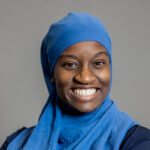
Fatimah Finney

Fatimah Finney, LMHC, is a serial goal-setter, lover of new ideas, and imaginative thinker. She is a certified IFS therapist and maintains a private practice serving BIPOC and young adults. As an administrator of the Intercultural Development Inventory, Fatimah is a consultant to individuals and organizations looking to build their capacity and skills in centering diversity, equity, inclusion, and social justice. Fatimah facilitates workshops on intercultural competence, microaggressions and mental health awareness with an aim to make workplaces more inclusive and equitable. Prior to her counseling and consulting practice, Fatimah spent much of her career providing in-home therapy to children, adolescents, and adults and serving in clinical leadership roles. Through her work in community mental health settings, she cultivated a strong commitment to helping therapists increase their cultural competence and clinical fluency with diverse populations.

Headshot of Richard Schwartz

Richard C. Schwartz

Richard C. Schwartz, PhD, is the creator of Internal Family Systems, a highly effective therapeutic model with a growing evidence base that de-pathologizes the multi-part personality. Richard is also the founder of the IFS Institute, which primarily offers training for professionals. He is currently a Teaching Associate in Psychiatry at Cambridge Health Alliance, a Harvard Medical School teaching affiliate. Richard has authored or co-authored more than ten books on Internal Family Systems and related topics, including No Bad Parts and Internal Family Systems Therapy. He lives near Chicago with his wife Jeanne, Vice President of the IFS Institute, close to his three daughters and six grandchildren.

Program Content

Expand All
Not Enrolled
or $245

Program Includes

  • 4 Modules
  • 12 Lessons
  • 14 IFS Credits
  • Program Certificate