
Back to Programs

IFS: A Compassionate Approach to Trauma and Addictive Processes

Cece Sykes, Frank Anderson, and Richard C. Schwartz

About this program: 

This program explores a compassionate IFS approach to working with trauma and addictive processes. Led by Cece Sykes, LCSW and Frank Anderson, MD, the course integrates research with practical interventions for working safely with intensity, shame, and protective strategies related to addictive processes. Through teaching and clinical examples, you’ll learn how applying IFS theory supports the healing of parts’ burdens and restores trust in Self. 

This learning program was held live in Winter 2021. 

Module 1: Working with Intensity: Safe IFS Interventions with Trauma and Addictive Behaviors 

This module introduces how trauma and addictive processes are understood within the IFS model. You’ll explore how working with intensity requires compassion, safety, and Self-led presence. 

Module 2: Compassion for Addictive Process 

This module explores addiction as an internal process within the IFS model. You’ll explore how addictive processes interact with the internal system and how Self-led relationships support sustainable change. 

Module 3: Shame, Habits, Biology, and Connection 

This module explores how addictive behaviors operate within complex internal systems, and how compassion, connection, and Self-led relationships support meaningful change. 

Module 4: Integration: Key Clinical Concepts with Trauma and the Addictive Process 

This module examines what healing looks like when working with trauma and addictive processes in IFS. You’ll explore how integration, Self-to-part relationships, and attention to biology, habit, and cultural burdens support lasting change. 

What’s included:

This course includes approximately 4 hours of core teaching on the program’s main topic, along with around 5 hours of recorded live Q&A sessions facilitated by the instructor. 

You’ll also get approximately 4 hours of exclusive bonus content featuring Dr. Richard Schwartz, the founder of IFS. These recorded demonstrations and case consultations offer rare, behind-the-scenes access to see the model in action. While these sessions may not always align directly with the program’s primary theme, they’re designed to deepen your overall clinical understanding and help you see how IFS principles show up across different contexts. 

What are on-demand programs:

IFSI’s on-demand courses are recordings of some of our most loved advanced IFS programs led by IFS  trainers and thought leaders who bring deep experience and insight. Learn anytime, at the pace your system needs. 

Who is it for: 

These offerings are ideal for those who are enrolled in or have completed IFS Level 1 Training, and those who have already participated in the IFS Online Circle. They’re designed to help you deepen specific skills, build confidence in niche areas, and feel more grounded in your work with clients. 

CE Credit & Certificate of Completion: 

Please note that these programs don’t offer professional CE, but each provides 14 IFS CE Credits to support your IFS certification or recertification path. An IFSI Certificate of Completion will also be available upon completion of this program.  

Note: Materials and methods included in this course may include interventions or practices that are beyond your scope of practice. As a professional in your given field, you are responsible for reviewing the scope of practice, including activities that are defined by applicable law as beyond the boundaries of your practice, and applying your learning in compliance with your professional standards. 


Meet Your Instructors
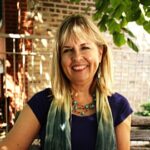
headshot of Cece Sykes

Cece Sykes

Cece Sykes, LCSW, ACSW; IFS Senior Trainer, US and international. Contributed to IFS training manuals and teaches L1,  L2  Compassion for Addictive Processes and Level 3. Cece has over thirty-five  years of clinical experience working with individuals, couples and families, specializing in work with the effects of trauma and addiction. Her chapter on working with addictive processes appears in IFS Innovations and Elaborations (2016). She co-authored IFS Treatment for Addictions: Trauma-Informed Compassion-Based Interventions for Substance Use, Eating, Gambling and More  (2023) with Martha Sweezy and Dick Schwartz. Cece also has special interests in spiritual practices intersecting with therapy and in the impact of psychotherapy upon the life of the therapist and she lectures, consults and and leads workshops on these and related topics. Cece lives and works in Oak Park/Chicago.

Frank Anderson

Dr. Anderson began his journey by earning his bachelor’s degree in chemistry from the University of Illinois in 1985, followed by his M.D. degree from Rush University Medical School in 1989. He completed his residency in psychiatry at Harvard Medical School. After graduation, he stayed on as a clinical instructor at Harvard while working as a staff psychiatrist at the Trauma Center at the Justice Resource Institute under the direction of Bessel van der Kolk. In 1994, Dr. Anderson launched his private practice, centered on the treatment of trauma, including single-incident trauma, complex trauma, dissociative identity disorder, and post-traumatic stress disorder (PTSD). Providing compassionate care, he also specializes in the treatment of attention deficit hyperactivity disorder (ADHD), autism spectrum disorders (ASD), and lesbian, gay, bisexual, and transgender (LGBT) issues. Patients benefit from Dr. Anderson's psychopharmacology expertise as well as his training in sensory motor psychotherapy (SP) and eye movement desensitization and reprocessing (EMDR). Dr. Anderson’s professional focus expanded in 2004 when he began to integrate the IFS model into his passion for psychopharmacology, neurobiology, and trauma therapy.

Headshot of Richard Schwartz

Richard C. Schwartz

Richard C. Schwartz, PhD, is the creator of Internal Family Systems, a highly effective therapeutic model with a growing evidence base that de-pathologizes the multi-part personality. Richard is also the founder of the IFS Institute, which primarily offers training for professionals. He is currently a Teaching Associate in Psychiatry at Cambridge Health Alliance, a Harvard Medical School teaching affiliate. Richard has authored or co-authored more than ten books on Internal Family Systems and related topics, including No Bad Parts and Internal Family Systems Therapy. He lives near Chicago with his wife Jeanne, Vice President of the IFS Institute, close to his three daughters and six grandchildren.

Program Content

Expand All
Not Enrolled
or $245

Program Includes

  • 4 Modules
  • 12 Lessons
  • 14 IFS Credits
  • Program Certificate